

The year is 1974. Gerald Ford is President of the United States and the country is approaching its bicentennial anniversary. Disco balls, bellbottoms, high gas prices, and economic malaise define the era. A young couple has just moved to Santa Fe, New Mexico from Los Angeles, California, eager to set down roots, start a family, and hopefully secure a place in the American middle class. They both come from loving, working-class families where financial resources were scarce. Getting started means moving in with one of their parents until that becomes untenable for the new bride. The husband has recently returned from military service in Vietnam and qualifies for a VA loan — a mortgage program that enables veterans to purchase homes with little to no down payment. That’s the help they need, but it’s not nearly as important as the total cost of the home relative to their income. They are able to buy a modest starter house for $24,000, roughly 1.5 times their combined incomes as a newly minted public school teacher and a government photographer. Two years later they welcome their first child and are able to buy a slightly larger house down the street. They were on the road to financial stability. They eventually raised three children and sent them all to college. The goal was attained — a solid middle-class life with the realistic expectation that their children would do a little better than them. The American Dream.
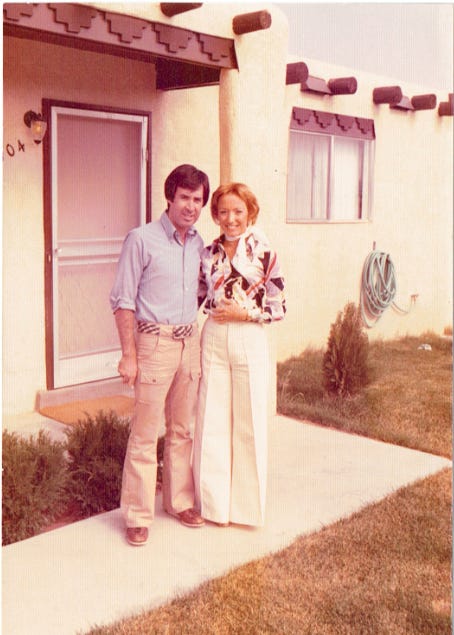
These people are my parents. Their story is a common one among the baby boomer generation. You didn’t need to be a lawyer or a doctor to own your own home. Yes, great federal programs provided favorable mortgages to veterans and lower-income families. But the real story is the price of housing. In 1974, the median household income was about $13,000 and the median new home price was $36,000 — a ratio of 2.8x. Today, that same ratio is 5.0x, nearly double the level from fifty years ago. That’s not just a number. It is the difference between getting a toehold into the middle class versus never getting there. It’s the American Dream going poof right before our eyes.
How did we get here? That is a complicated answer I intend to write about in the near future. But the simple answer is this: we have underbuilt our housing stock by nearly 6 million homes. There is only one solution — build more housing.
If only it were easy. It requires dismantling a half-century’s worth of obstacles at nearly every level of government across this country. No single act of legislation can solve the problem. It will take sustained effort and reform over decades to work our way back to sane housing costs. But better to get started now.
That is why I was so heartened when Congress — in one of the most bipartisan acts in a long time— overwhelmingly passed the 21st Century Road to Housing Act this week. The bill cleared the Senate 85-5 and the House 358-32. To put that in perspective: in a Congress where almost nothing passes with broad agreement, nine out of ten members of both parties voted yes. The bill cuts red tape, streamlines permitting, rewards cities that build, and takes meaningful steps to expand the supply of housing that working families can actually afford. It is not a silver bullet. But it is the most significant federal action on housing since 1990, and it is an important first step down a long road.
Which makes what happened this morning all the more frustrating. President Trump canceled today’s signing ceremony, announcing he would not put his signature on the bill until Congress passes an unrelated voting measure called the SAVE America Act. A bill that nine out of ten members of Congress just voted for — including the overwhelming majority of his own party — is now being held hostage to a political fight that has nothing to do with housing. Senate Republicans called the move “inexplicable.” It is.
The good news: Trump has not vetoed the bill. Under the Constitution, if he neither signs nor vetoes it within ten days while Congress remains in session, it becomes law automatically. Senate leaders have indicated they will hold pro forma sessions during the upcoming recess specifically to prevent a pocket veto — making enactment likely, though not yet certain. And if he does veto it, Congress almost certainly has the supermajority needed to override him. But the moment deserves to be named for what it is — a political detour on an issue too important to play games with.
I have spent my career in real estate finance, and I now serve as President of the Board of the Harris County Housing Finance Corporation, an agency responsible for expanding the stock of affordable housing in the third most populated county in the US. I have seen this crisis from both sides — where the capital flows and where the need lives. The gap between those two worlds has never been wider.
If you want to improve education, fix the housing crisis. If teachers can once again afford decent housing near the schools where they work, we will attract and retain better teachers with the mental space to actually teach. If we want safer streets, make housing reachable again for police officers and firefighters. If we want better and more affordable childcare, bring housing costs down. The connections run in every direction.
We have to get back to the ratios of the 1960s and 1970s. To those who say it isn’t possible — I promise you it is. But we have to regain the ability to build again. Our future as a country depends on it. More to come.
To learn more, please read the Leadership Now Project’s policy paper, “More Homes, Lower Costs,” which I co-authored earlier this year.
Very well written and insightful. You have broken down potentially hard concepts for average Americans like and made them understandable, relatable and something to fight for.
Blessings!
Glad to see others writing on the same topic. Getting the American Dream the way our parents did just isn’t working.
https://structurallybroken.substack.com/p/why-homeownership-feels-out-of-reach?r=mlac&utm_medium=ios